Kent Le,
3 must-have books that entrepreneurs will need in 2015
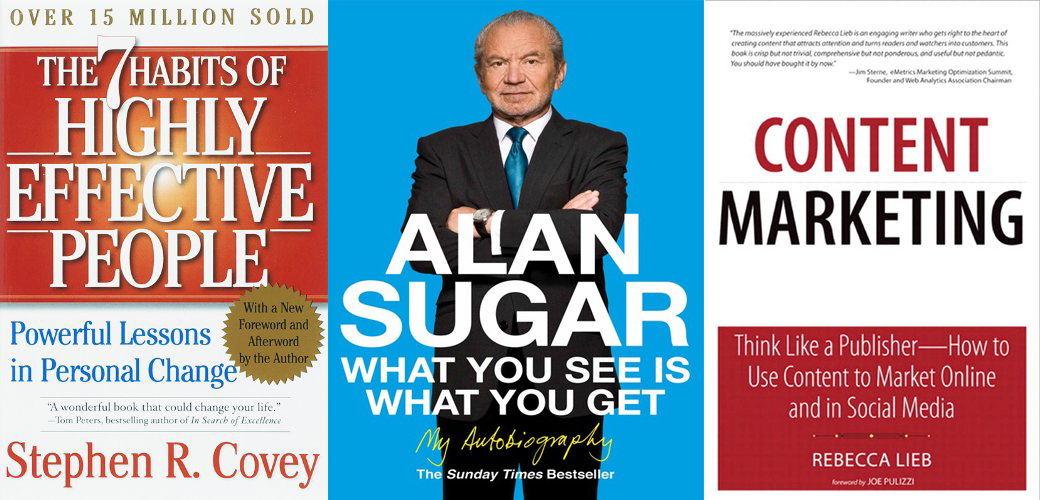
Do you know one thing that most successful business people share? They read at least 30 minutes a day. Reading helps you sharpen your thinking and it gives you new knowledge and skills for life and for business. We recommend that you start 2015 with these 3 must-read books that will help you excel and succeed.
The 7 Habits of Highly Effective People by Stephen Covey
This self-help book is my all time favourite and was the first ‘serious’ book I purchased when I went back to university for postgrad studies. Undoubtedly it is one of the most popular books about leadership and management.
I like how the author divides the book into three themes: independence, interdependence and continuous development. From these themes, you can tell what it mainly is about. The author discusses how we should move from dependence to independence in the first 3 chapters, helping you learn to think creatively and independently, and how to self-discover and clarify your most important character values and life goals.
Then, the next 3 chapters focus on how you work with others – either your peers, partners or your employers. My take-away in this part is to “think win-win”. This has helped me greatly in my professional and personal life. It teaches me how to handle difficult situations without compromising and how to work effectively with my teammates to achieve a common goal.
The final habit, also the last chapter in the book, talks about continuous improvement in both the personal and interpersonal spheres of influence. If you are an established or aspiring entrepreneur and haven’t read it yet, this is a must buy for 2015!
What You See Is What You Get: My Autobiography by Alan Sugar
You’re probably wondering why I’ve added a memoir in this list. At a recent Facebook advertising workshop I attended, I met a Polish entrepreneur who knew about a lot of case studies of business development. When I asked her how long she had worked in London and how she came across such interesting stories, she told me that everything she learned was from reading autobiographies of successful business people, picking up tips and stories from their real life experiences.
So I decided to do some research and since I’m already a big fan of The Apprentice, I decided to buy Alan Sugar’s memoir and do you know what? I absolutely love it and honestly I can call it a brief history of British business. I’m fascinated by the amazing story of his life: he’s the boy from a council estate who became a Lord, the market trader who became a market leader, the chairman of Tottenham Hotspur who became the star of the hit TV show The Apprentice.
This 600-page book has given me a deep understanding and insight into the business world in Britain from the 1960s to the late 2000s. If like me you are not British-born, it is truly an eye-opening experience to find out how business was done and has changed in the UK, what the manufacturing business was like 50 years ago and how is has transformed during Margaret Thatcher’s time until recent years, and how the competition in trade markets has changed dramatically over the years.
I personally like how Lord Sugar prefers not to be called an entrepreneur. Instead, he considers himself someone with “entrepreneurial spirit” and suggests specific traits one must have to walk this path. From his own successes and failures, he explains which responsibilities you will take on, skills you need to have and challenges you are likely to face once you start your own business.
If you are still a newbie to the entrepreneurs’ community in the UK, and especially in Greater London, this book will give you the big picture of British entrepreneurship. There is no doubt you’ll pick up a few tips on leadership for yourself.
The term “Content Marketing” has been used so frequently recently that some people still think of it as a new and trendy tactic for business. You’ll be surprised to know this practice has been used for decades, under different names, for small startups and large corporations alike.
In the last 20 years, marketing and publishing professionals have used a number of terms to describe the concept of brands telling stories to attract and retain customers: custom publishing, custom media, customer media, customer publishing, member media, private media, branded content, corporate media, corporate publishing, corporate journalism, and branded media. The author points out an important fact that buyers nowadays accept content from corporate sources more than ever. They find 99% of purchase information by themselves, rather than through paid media like advertising.
So, just imagine instead of buying attention, you create content for your business that is so informative, valuable and compelling that it positively affects the lives of your prospects and customers, and makes a positive impact on your business.
I have worked with several clients to develop content for their owned channels and from my experience this practice is ideal for small to medium size businesses, especially professional services and established entrepreneurs. Why? Unlike advertising, you don’t need extensive HR and financial resources to do it. You only need good insight into your profession, excellent writing skills and a clear understanding of your audience. One thing to keep in mind is that content marketing is not simply blogging, although this is an important tactic. Read the book and find out the rest of them for yourself. I’m sure you’ll be rethinking your marketing strategy for 2015.
Good luck and we hope these books will give you some new perspectives on your strategy and growth in the new year. Do let us know how you find them!

The Old Bakery, 90 Camden Road
Tunbridge Wells TN1 2QP